
Overview
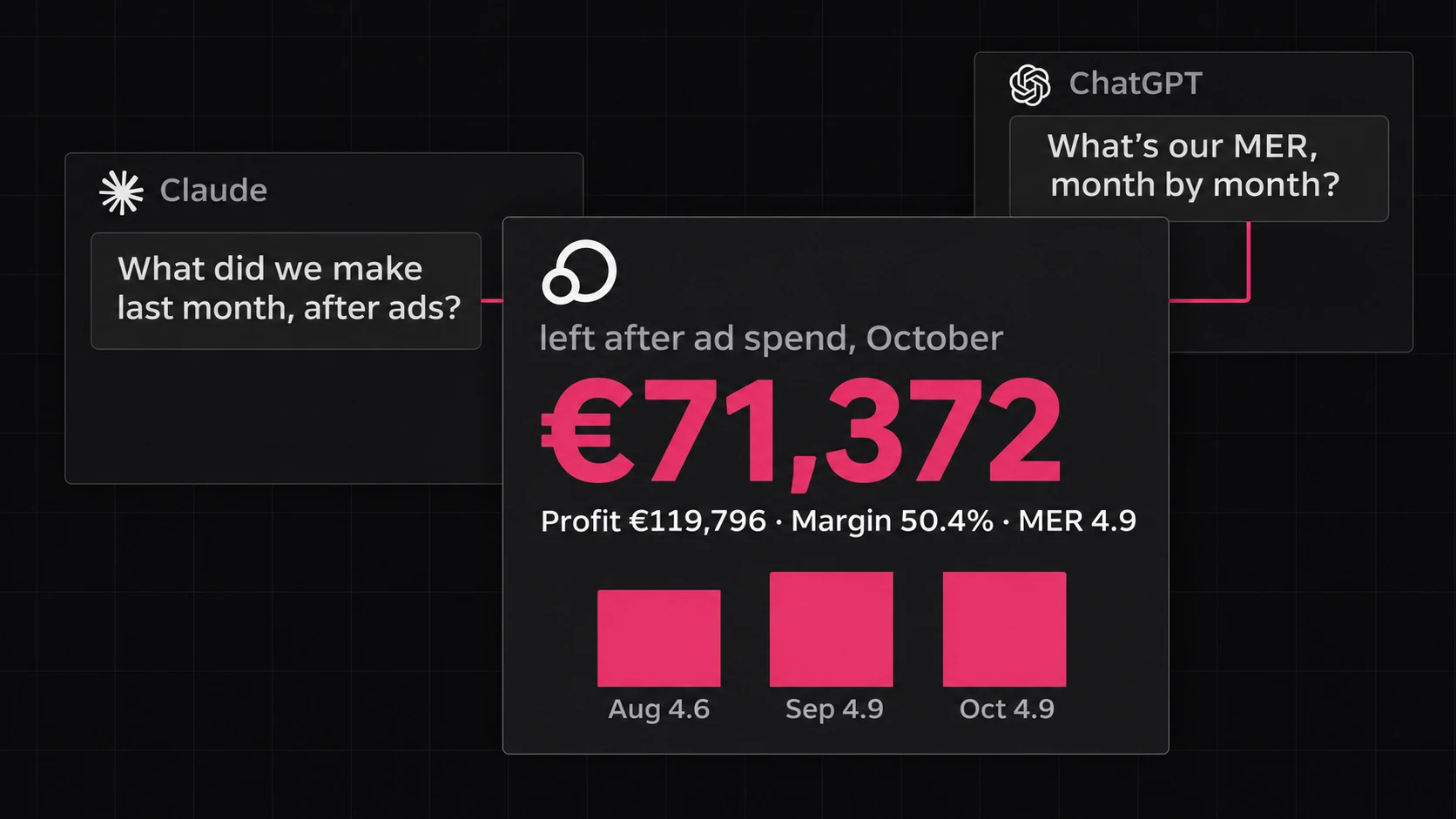
Your Ordinary reports in Claude and ChatGPT now answer "what did we make last month after ad spend?" with your profit, your margin and what was left once the ads were paid, from your own costs.
New questions
Four more things Ordinary answers in your assistant
Once you connect Ordinary to Claude or ChatGPT, it answers these too, from the same sales, ad spend and costs you see in Ordinary.
Your Shopify profit, and what's left after ads
Profit and margin for any period, or day by day, week by week or month by month, from your own product costs and the fulfillment, shipping and payment costs you've entered. Then what's left once every connected ad platform is paid.
Marketing efficiency ratio and blended CAC
Your net sales for every 1 of ad spend across your connected ad platforms, month by month, next to your blended CAC: what a new customer cost you overall.
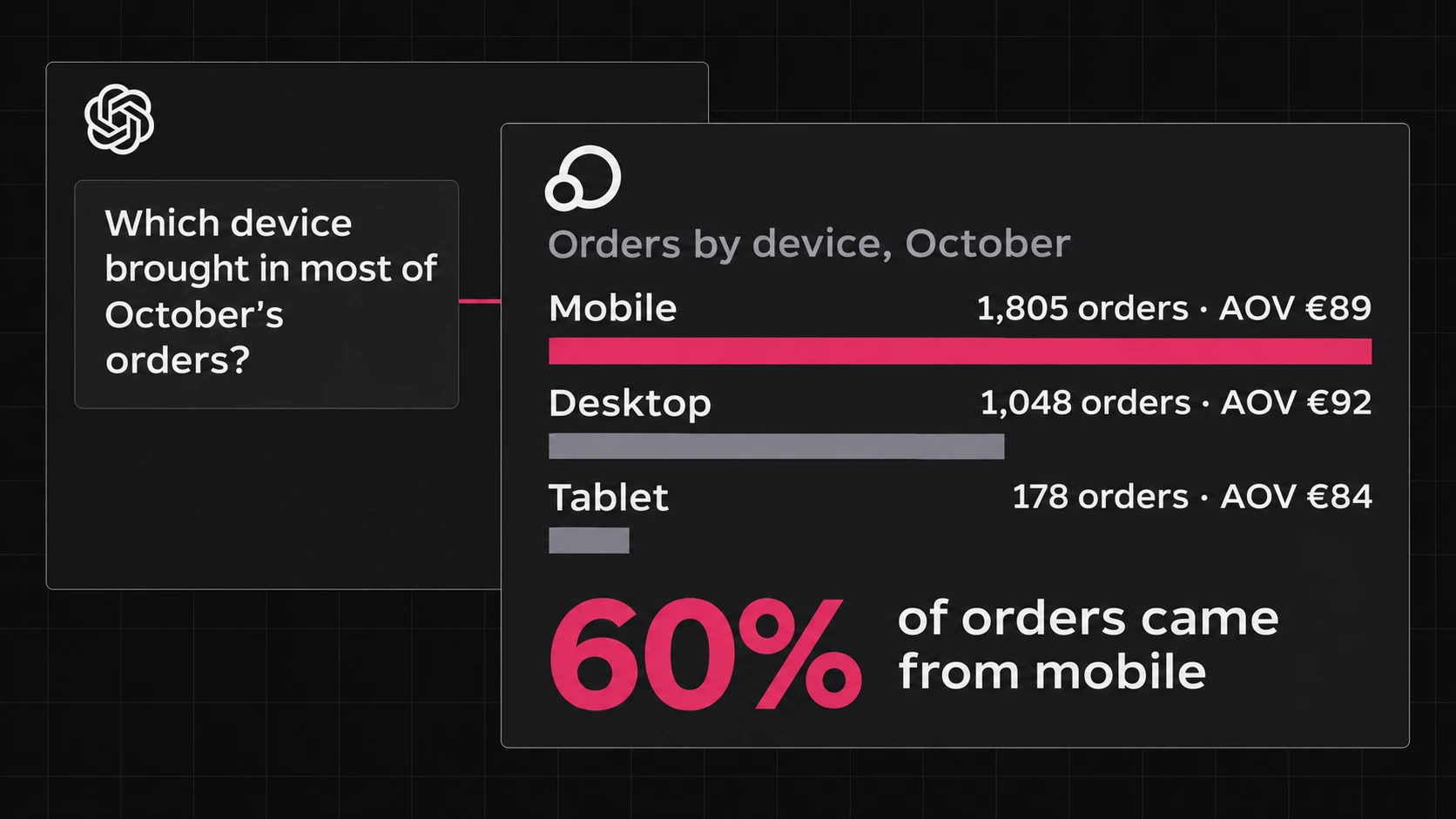
Sessions and conversion rate, on every device
Sessions, add to carts, checkouts, orders and conversion rate for the whole store, by day, week or month. By device, see orders, conversion rate, revenue and average order value on desktop, mobile and tablet.
Klaviyo campaigns and flows
Recipients, open and click rates, unsubscribes and the revenue Klaviyo credits to your campaigns and flows, one by one or in total.
Meta and Google Ads
How much of Meta's number comes from views
Ordinary's campaign reports now show how Meta's and Google's reported purchases break down.
Meta purchases, split into clicks and views
Where Meta reports it, Ordinary's View-through view now shows how many of Meta's reported purchases came from 7-day clicks and how many from 1-day views, with the value of each, beneath Meta's total.
Google view-through purchases, kept apart
When Google provides them, its view-through purchases now appear as their own count beside Google's reported purchase conversions, kept out of Google's conversion and revenue totals.
MER
What is MER in marketing, and how to calculate MER
MER, your marketing efficiency ratio, is net sales divided by total ad spend for the same period. A store with 60,000 in net sales and 25,000 of ad spend across Meta and Google has an MER of 2.4.
Ask Ordinary for MER and profit after ad spend side by side: MER shows how hard your ads work; profit after ad spend shows whether they paid.
Who can ask
The Claude and ChatGPT connection is included on every paid plan: Starter, Advanced and Enterprise. Sessions and device answers come with it; MER and acquisition cost need a connected ad platform, and Klaviyo answers need Klaviyo connected. Profit answers use your product costs, so they need Advanced or Enterprise and costs entered for most of what you sell. The Meta and Google Ads reports are on every paid plan with those accounts connected.
Already connected? Start a new chat so your assistant picks up the new questions; if it still can't answer, remove and add the connector again.
 Connect your store